25 March 2022

Maths Student of the Week

Judith 7T - Excellent focus and effort in lessons.

Well Done!


Geography Club Passes Its Century! 

Each week the Geography department runs an after-school club where students pop in to get help with homework, follow up on something they have been studying in class, or just discuss matters geographical with their teachers. 

We have some regulars who come most weeks, but we recently passed an important milestone - our hundredth student visited us (Willow in Year 8). 

Anyway, if you are one of the few who has yet to visit, please do so.  108 and counting.  We're in room 1.10 every Thursday at 3.30 and you are most welcome.

M Evans
Head of Geography


Year 13 17th Century London Walking Trip  


After school on Monday 21 March, nine students from Year 13 accompanied Mr Gunn on a walking trip through the streets of central London visiting key sites from the 17th century.

The students have been part of a ‘Sixth Form History Seminar’ group that have met weekly, discussing key historical texts in preparation for applications for History at university. The trip ties in with the A Level course about Stuart Britain and it was a chance to see many places discussed in lessons firsthand as well as discuss the changes to London in the past 350 years.

We left school and took the 29 bus to Trafalgar Square, where the first stop was the statue of Charles I on horseback - a statue with a very interesting history. Made during Charles I’s personal rule, it was taken down and ordered to be destroyed by Parliament in 1649 following Charles’ execution and the establishment of the Republic. However, it was kept hidden and erected again in 1675 after the Restoration of the monarchy. Ironically, the Charles I now looks down on Parliament from Trafalgar Square.
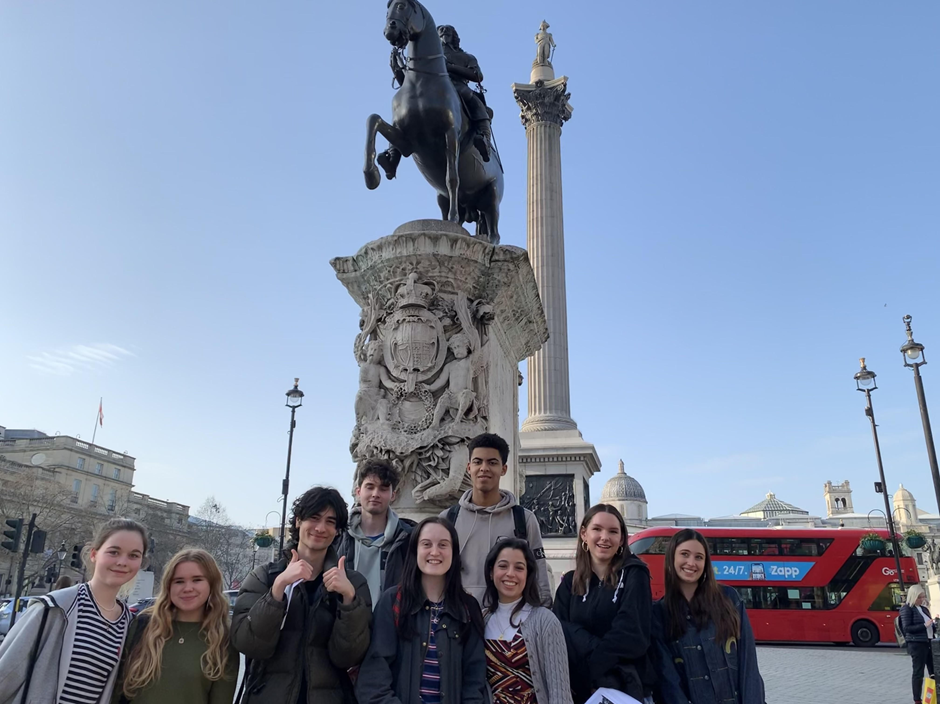
Then we walked to the Banqueting House on Whitehall - a building with an incredible ceiling mural painted in 1636 by Rubens. Not only was the mural an important way of Charles I promoting his belief in ‘divine right of kings’ but it was also the location for the king to stage the ritual of healing the public of ‘the Kings Evil’. The building was also the location of the execution of Charles I in 1649 - another ironic twist of fate. By looking at a contemporary engraving of the execution, we were able to locate the precise location of the execution.

Following the Banqueting House, we then walked along the Strand and Fleet Street all the way to St Paul's Cathedral. By following this route, we were able to cover the entire spread of the Great Fire of 1666, really highlighting the extent of damage caused. We read an extract of Samuel Pepys’ diary from September 1666 when the fire started and discussed fire extinguishing techniques from the 17th century - primarily pulling down housing that was close to the flames.

We then took in the grandeur of St Paul's Cathedral and looked at 17th century engravings of what it would have looked like prior to its rebuilding following the Great Fire.

From St Paul’s, we walked to the Monument to the Great Fire and read the engraving, which reflects the anti-catholicism of the times (the original engraving was changed in 1830 because of this).

After visiting the Monument, we walked to the ruins of St Dunstan’s in the East - now a public park. This church was damaged by the Great Fire, rebuilt by Sir Christopher Wren and then damaged again in 1941 during the Blitz. The ruins are now a public park - a place of real tranquillity right in the heart of the City of London.
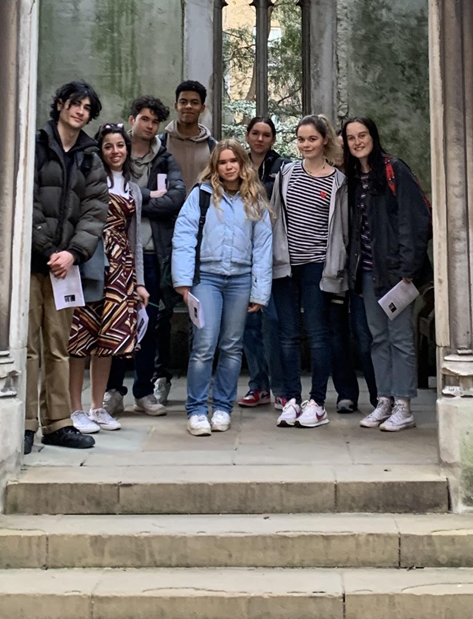
Following St. Dunstan’s in the East, we walked to Seething Lane - the street Samuel Pepys lived on in the 1660s. We visited his statue and took in the many portrayals of 17th century life on the slabs around the statue - including depictions of plague doctors, fleas, musical instruments and Pepys’ cheese and wine!

Finally, we visited the churchyard of St Olave’s church - the church Pepys’ frequently visited. The grounds of St Olave’s are raised due to the large number of bodies buried there during the Plague of 1665. Again, it was a place of real tranquillity and an excellent place to think about the vast changes to London in the last 350 years.

Mr Gunn


Message from the Head Girl team

Thank you everyone who participated in wearing blue and yellow to support Ukraine, and for all those who bought something from the bake sale on Wednesday 23 March!

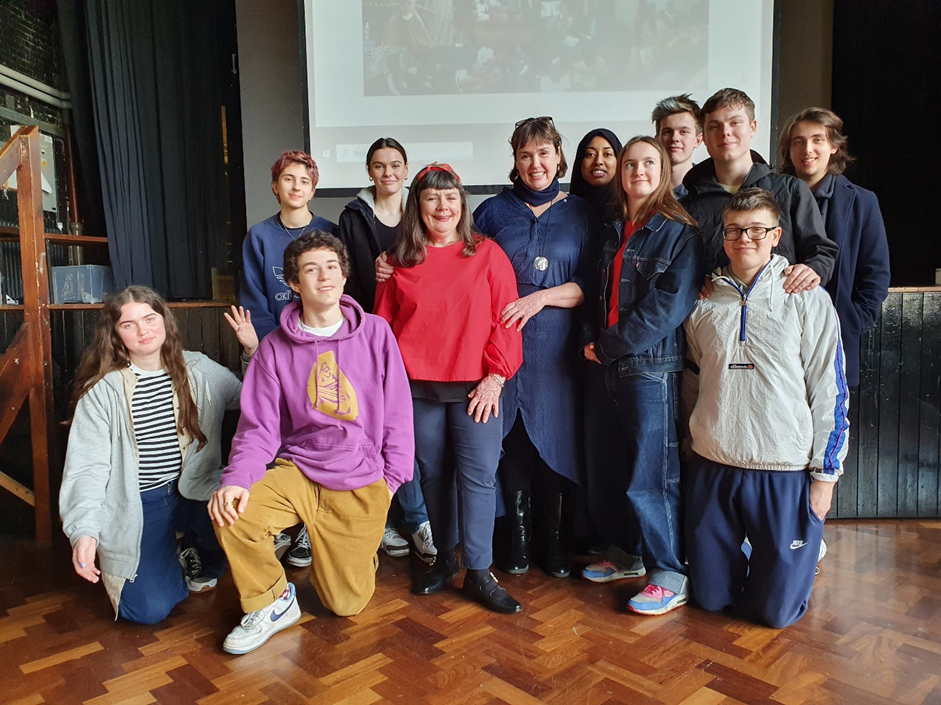
 

We raised over £720 for Culture Day and the bake sale, so thank you so much to everyone who has contributed!


Parent/Governor Meeting Overview

Thank you to all parents and carers who attended the Parent/Governor meeting last week. This was a wonderful opportunity for parents to meet members of the school governing body face to face, to hear about  the governors' strategic role shaping the overall direction of the school.

The evening began with short introductions from both the Chair of Governors and the headteacher. They gave overviews of the current school priorities and challenges. They talked about the School Improvement Plan and the financial strains being managed.

The meeting was then opened up to questions, initially those received by email in advance  and later from the floor resulting in some interesting discussion. The minutes from the evening are available here.


Assembly Speaker, 14 March
Maggie O’Kane, Executive Director of Global Media Campaign to end FGM (with Bernadette Biggs)

Last week, in the Sixth Form assembly, we were lucky enough to get the opportunity to hear from Maggie O’Kane and Bernadette Biggs (Year 13 Head Girl’s mother!) as part of the Global Campaign to end FGM. One girl is mutilated every ten seconds on average, and in 2020 UNICEF found that 4 million girls were at risk of being cut - highlighting the urgency of the issue.

We were shown videos and statistics that sent the message home about the grave extent of FGM - including many local religious leaders throughout Africa who had changed their mind on what was once a traditional cultural practice once they realised how inhumane it was. The ritual is often linked to purity and female sexual promiscuity and a transition into womanhood, with girls 8-14 being painted white after they undergo the process, symbolising purity. This often happens at Christmas, and the participants are offered gifts such as handbags and umbrellas to complete the process. This practice not only is medically unnecessary, and overwhelmingly painful and disturbing for anyone to endure, but also leads to long term complications including in pregnancy and childbirth - girls also often have their legs tied together for weeks so they can complete the process.

However, on a positive note, so far, the campaign has had great success, with many international football stars, including Emmanuel Emenike saying no to FGM with the ‘My girls are born perfect’ campaign, where these men share videos with their daughters reminding everyone how it is unnecessary for them to undergo FGM. Impressively, following the campaign’s work, Kenya saw rates of FGM reduce from 89% to 5%.

The students had several questions for Maggie and Bernadette - one prefect asked how they plan to combat FGM without impeding on what is a long-established cultural practice in many countries. Maggie and Bernadette answered that they are very sensitive with these issues and they let local activists take the lead as they know how to handle their own communities - religious leaders became campaigners once they were no longer shrouded in the mystery of the FGM rituals.

They were also asked if they think their target of ending FGM by 2030 is realistic. They were confident in answering yes - the key is young people and social media, who have been causing an unprecedented amount of speedy support and awareness in today’s increasingly digital age.

The talk ended with a call out to students and the school as a whole to educate us on what we can do to support the campaign. This included educating ourselves on the above issues, sharing on social media, and organising fundraising. This will help contribute to their success - 97% of those surveyed in Kenya were changing their mind about FGM.

This is a very difficult and disturbing topic which we were introduced to very sensitively and expertly by the two speakers. Many students were appalled at just how horrific the descriptions of FGM were, and I’m sure we all feel strongly as feminists that we must end the practice. Thank you so much to the speakers and we hope to hear from them again in future - CSG is planning some fundraising events to further support the charity with their invaluable work.


Casca News

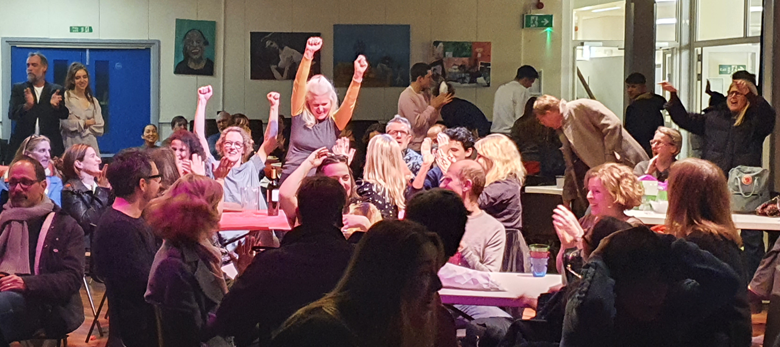
A big THANK YOU to everyone who came to our CASCA events over the last few weeks. It was great to see CSG families and friends again.

And an even bigger THANK YOU to those that donated items for raffles and the CASCA table at the table top sale; those that baked goods for volunteer gardeners and the Quiz Night; and those that volunteered their time and energy to make these events such a huge success, including Kathy Neal and her amazing QUIZ Team.

Everything is done to raise much-needed money for the school and every type of contribution plays its part. 

We are still tallying total funds raised across the events, but here are some highlights…

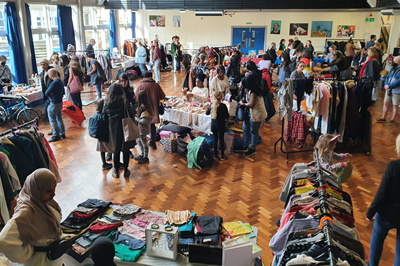
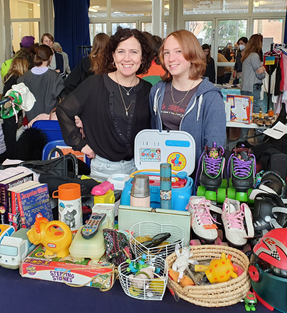
The Annual CASCA Indoor Car Boot (Table Top) Sale

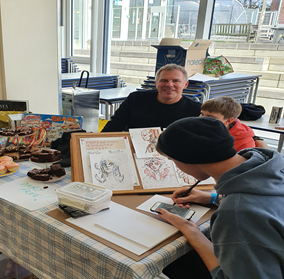
The Sale raised important funds for various greening projects and equipment at CSG as well as a number of tables raising money for Ukraine.

Bespoke character portraits were on offer from resident 6th Form artist @jd_sharrocks--follow him on IG for more of his amazing designs!

The Annual Quiz Night!

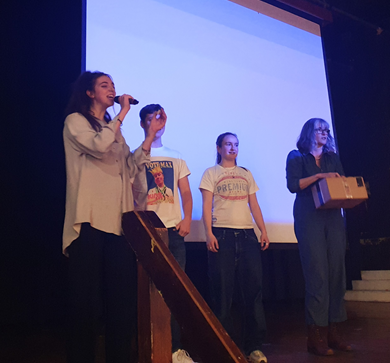
A big shout out to our resilient and entertaining Quiz Master/CSG Dad Nick Grosso and the amazing Head Girl Team for their smooth cake sales and all around helpfulness throughout!

The school has requested the money raised go towards the purchase of an interactive screen for the library (for lessons and film screenings) as part of a larger ongoing commitment to improving tech & innovation at CSG.

Hope everyone has a lovely April Break.

Your CASCA team